Media

Reviews
-
![]()
"It's Scott's voice that carries the book. She's funny about her worst behavior without using humor to dodge accountability. That balance is hard to pull off. This isn't a tidy redemption arc. It's a woman naming her patterns out loud so she can stop repeating them."
★★★★☆
— Los Angeles Book Review
Leah Tran -
![]()
"Pippa Scott is a strong writer with a firm hand, adept at painting vivid pictures of settings and situations. She’s earnest and real, stopping at nothing to explore her desire to satisfy her lovers in whichever way she can."
-
![]()
"Paper Girls Burn [is] an intense, influential survey that examines family connections, self-awareness, and growth under a new light."
— Midwest Book Review
-
![]()
"The author pulls no punches in revealing things that she’s done….Her frankness is refreshing….An indelible, sharply detailed life story that’s earnest and engrossing.
Our Verdict: GET IT"
Advance Praise
-
![]()
“Pippa Scott's debut memoir is deeply vulnerable and incredibly intimate, a rollercoaster ride that is bold and brazen on one page, and heartbreaking and harrowing on the next. From the first sentence, I felt invited into Scott's world, a confidante rather than an audience, like I was sitting across the table over a long meal with a dear friend. Scott wrestles with the shame, grief, longing, and sense of failure that arises from knowing at an early age that "something is different" but having no one to listen or help. With wit, bravery, and a dash of humour along the way, Paper Girls Burn demands that we re-evaluate our own internalized stigma and bias when it comes to mental health. Scott's raw honesty is an invitation for understanding and connection.”
— Christina Myers, Award-winning Author and Former Journalist (Halfway Home: Thoughts from Midlife)
-
![]()
“What Pippa Scott has done in Paper Girls Burn is alchemy. She has taken shame that lives in the body and turned it into story, humor, and light. As an AuDHD woman who has also been told she feels too much, I was reminded that sensitivity is not a flaw. It is proof we are still alive. Paper Girls Burn wrecked me in the best way. Pippa’s story is darkly funny, brutally honest, and achingly familiar to anyone who has ever tried to outrun their own heart. Her words carry that rare mix of defiance and tenderness that only comes from surviving yourself.”
— Genevieve LeDoux,
EMMY- winning producer, writer and creator of Star Forest -
![]()
“Scott’s story of growing up desperately searching for love and validation while dealing with inner chaos and self-destructive compulsions is riveting. At thirty-five, she found a diagnosis that explained her symptoms and a treatment that helped tame them. Paper Girls Burn captures the universal longing to be understood, to belong, and to be accepted for who you are.”
— Frank G. Anderson, MD
World-renowned trauma expert, Harvard-trained psychiatrist, and internationally bestselling author of Transcending Trauma and To Be Loved: A Memoir -
![]()
“A shocking, propulsive and brave account of a woman’s journey through childhood wounds, obsession, addiction, serious mental health issues and a heartbreaking litany of toxic men. Pippa takes us on her riveting quest for love with courage, vulnerability and raw truth. It’s a wild ride.”
— Cori Howard, Award-winning Author, Journalist and Poet (The Fifth Season)
-
![]()
"A courageous work of heart. Pippa Scott poignantly walks us through the painful terrain of her disorganized attachment experiences and into the hopeful work of learning to radically accept and love herself."
— Eli Harwood MA LPC, Therapist and Bestselling Author of Raising Securely Attached Kids, and How to Deal With Your ___ So Your Kids Don't Have To.
Press & Features
-
Books By Women
The Creation of Paper Girls Burn: A Borderline Personality Disorder Memoir by Pippa Scott -
BC LIVING
Featured in BC Living's Top Fall Reads.
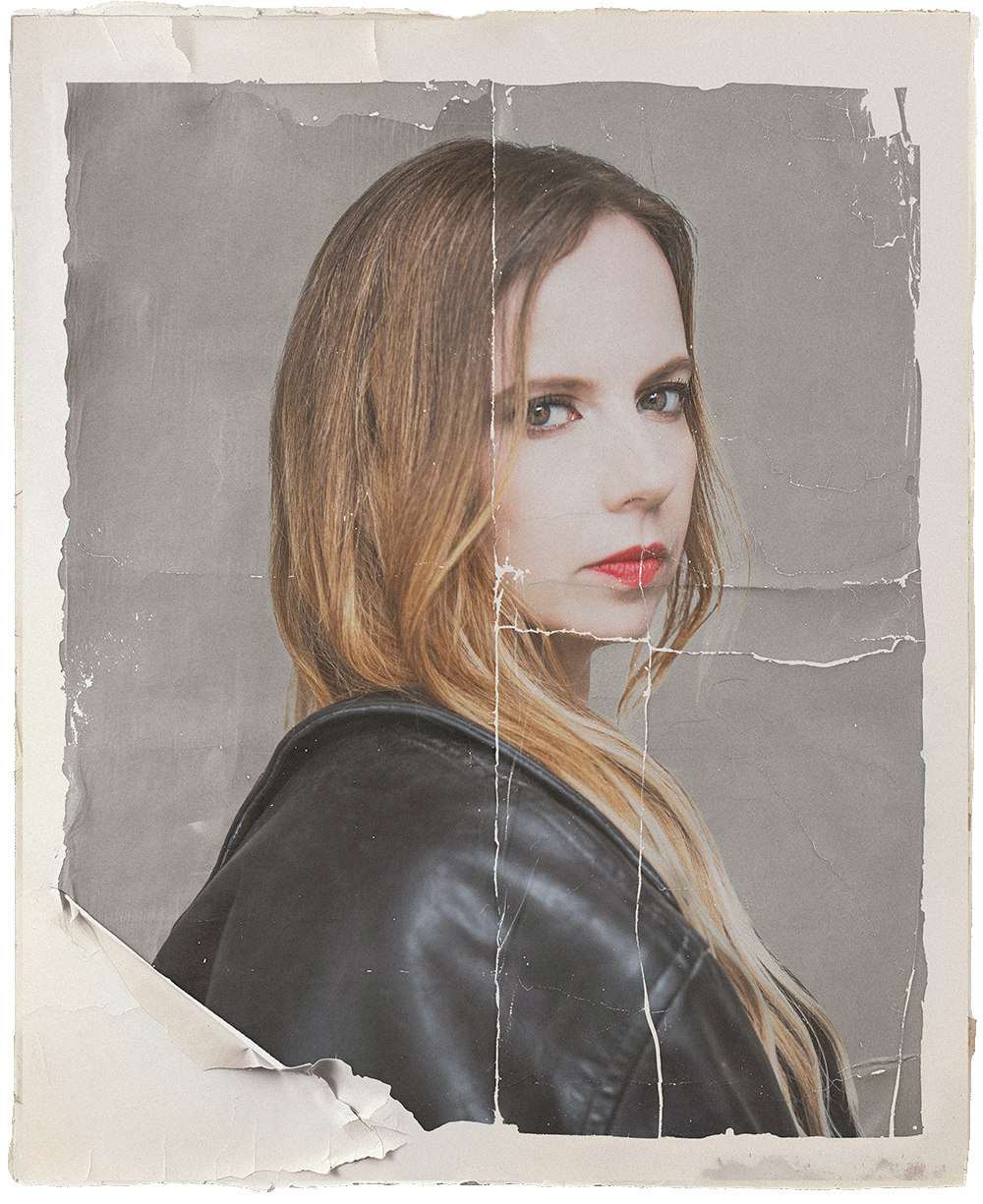
Naming the Fire Inside:
A Q&A with Pippa Scott
Much of Paper Girls Burn traces a pattern of pursuing unavailable or dangerous men. At what point did you realize you weren’t chasing love so much as relief from emotional pain?
I think I was aware from the start that there was a part of me that desperately wanted to prove I was worthy of love. These men offered a challenge through which to acquire it, as love, to me, was not something you were simply given; it was something you needed to win via approval. There was also a part of me that deeply related to these wounded men. I could feel that they, like me, wanted to be loved, and I wanted to help heal others as much as I wanted to be healed.
You don’t shy away from exposing behavior many people would prefer to hide—stalking an ex, manipulating a partner into marriage, compulsive sex. What scared you more: living those moments or putting them on the page?
They are different types of fear. Back then, my extreme behaviours stemmed from what felt like life-or-death alarms sounding. In those moments, they did not feel extreme; they felt true to my lived experience, which was that I was in severe danger and needed to do whatever I had to do to be safe. It was only after the alarms quieted that I could see them as extreme. That might be hard for some people to understand, but if you are in a building that catches fire, you might choose an extreme action you would normally never consider to escape the flames and smoke, like jumping out of a window. If we can all see that the building is on fire and that is why someone jumped, we would not describe their behaviour as extreme. But sometimes the fire is on the inside, and no one can see it. That does not make the experience any less real for the one suffocating. I think writing it down is both terrifying and therapeutic. I know I feel less alone when others say their inside thoughts out loud. When you speak your truth, it can also be freeing. No performance anymore. Just raw truth.
You were diagnosed with multiple conditions over time—depression, OCD, PTSD, ADHD, GAD, Cyclothymia, and eventually BPD. How did receiving more diagnoses paradoxically give you more clarity rather than more confusion?
In The Rocky Horror Picture Show, Dr. Frank-N-Furter sings, “I’ll remove the cause, but not the symptom.” Prior to these diagnoses, I often felt like I was treating the symptoms but not the cause. I felt there was something deeper at play than depression or anxiety, so more diagnoses offered further clarity as they got closer to the root of things.
Forgiving abusive or neglectful family members is a controversial idea. Was forgiveness something you felt, or something you chose because it was necessary for your survival?
It is becoming increasingly common to simply cut anyone toxic out of your life. I’m not saying that is never the appropriate response; it is not a one-size-fits-all approach. The saying “Those who live in glass houses shouldn’t throw stones” applies in the sense that I clearly see my imperfections and the people who have chosen to stand by me. I also feel that we learn so much from difficult relationships. I want to be careful, as I’m not saying let someone abuse you freely and keep them in your life. It has just been my experience that life is usually not that black and white. For the most part, I have never seen myself as a pure victim or a pure abuser; there is a lot of grey, and I choose to explore that. Life has taught me that the answers are rarely held at the extremes but rather in the middle.
You say abandonment shaped your adult relationships. How does childhood trauma quietly rewrite our definition of love?
Our relationship with our parents or caregivers is our blueprint for love. It gets set very early on. My blueprint taught me that love was something you earned; that love is not consistent and requires constant checking and reassurance; that competing for attention was critical; and that if you were bad, love was optional. As we age, we carry those beliefs into our relationships and often pick partners who reinforce them. What we most fear in our relationships tends to, sadly, become a self-fulfilling prophecy. I was terrified of abandonment and usually picked emotionally unavailable men, then allowed my anxiety to run the show with clinginess or needs for constant reassurance, until it created the thing I feared most.
If a reader recognizes themselves in your most uncomfortable chapters—the obsession, the shame, the desperation—what is the one thing you want them to know before they try to change anything about themselves?
To give themselves some space. It can be very confronting to read things that we recognize in ourselves and are simultaneously deeply ashamed of. It can sometimes even make us project the discomfort outward. The world teaches us there is nothing worse than a desperate, needy woman. But being desperate or needy is not an inherently bad quality. It is an honest reaction to deprivation. Learning how to meet these needs in healthy ways is the journey, not punishing oneself for a basic need. Hold empathy for yourself the way you likely would for someone else.
Shame plays a huge role in your memoir. Why is shame so dangerous to healing?
Shame can be dangerous because it encourages us to hide, deny, or avoid accountability, which can easily block our path to healing. But it can also be a huge motivator for change, because it ironically acts as a light to where we still have inner work to do. My mentor used to have me imagine a long dining table set for dinner, and at each setting, there is a different emotion. They are visitors who come and go, but we leave a plate for them and welcome them all equally. Seeing shame as an enemy can further restrict healing. Instead, we need to invite it to the table and learn from it like any other emotion. In my experience, it is toxic positivity that is the most dangerous to healing, as it sets the expectation that to be happy, we must feel no other emotions in life. It encourages suppression, yet to feel joy deeply, we must also feel sadness deeply.
At thirty-five, your diagnosis helped you make sense of decades of behavior. What do you grieve most about the version of yourself who lived without that understanding?
That I could not validate my own experiences. To claim my own voice and to trust myself. That I kept telling others the water was burning me from the faucet, and they kept responding that I was stupid, ridiculous, or too sensitive, so I would force myself to use that water, and I would burn and burn. There was no felt safety. I abandoned myself for others’ approval. Their opinions and experiences mattered more than mine. I got mad at myself for not doing things the way others expected of me. I am having to now rewire my own narrative that has been heavily criticizing me for years, to learn I can trust my intuition. It’s a process.